An electric fleet
More than 100 electric vehicles, including the Eicher Pro X, now run on Harsh routes — 63 in middle-mile and 18 in last-mile service — cutting tailpipe emissions in dense urban corridors.

Sustainability / Always moving, cleaner
Logistics moves the economy — and it can do so with a smaller footprint. Harsh Express is cutting carbon across its fleet and operations, from electric vehicles and rail to smarter routing and a people-first culture.

Our progress
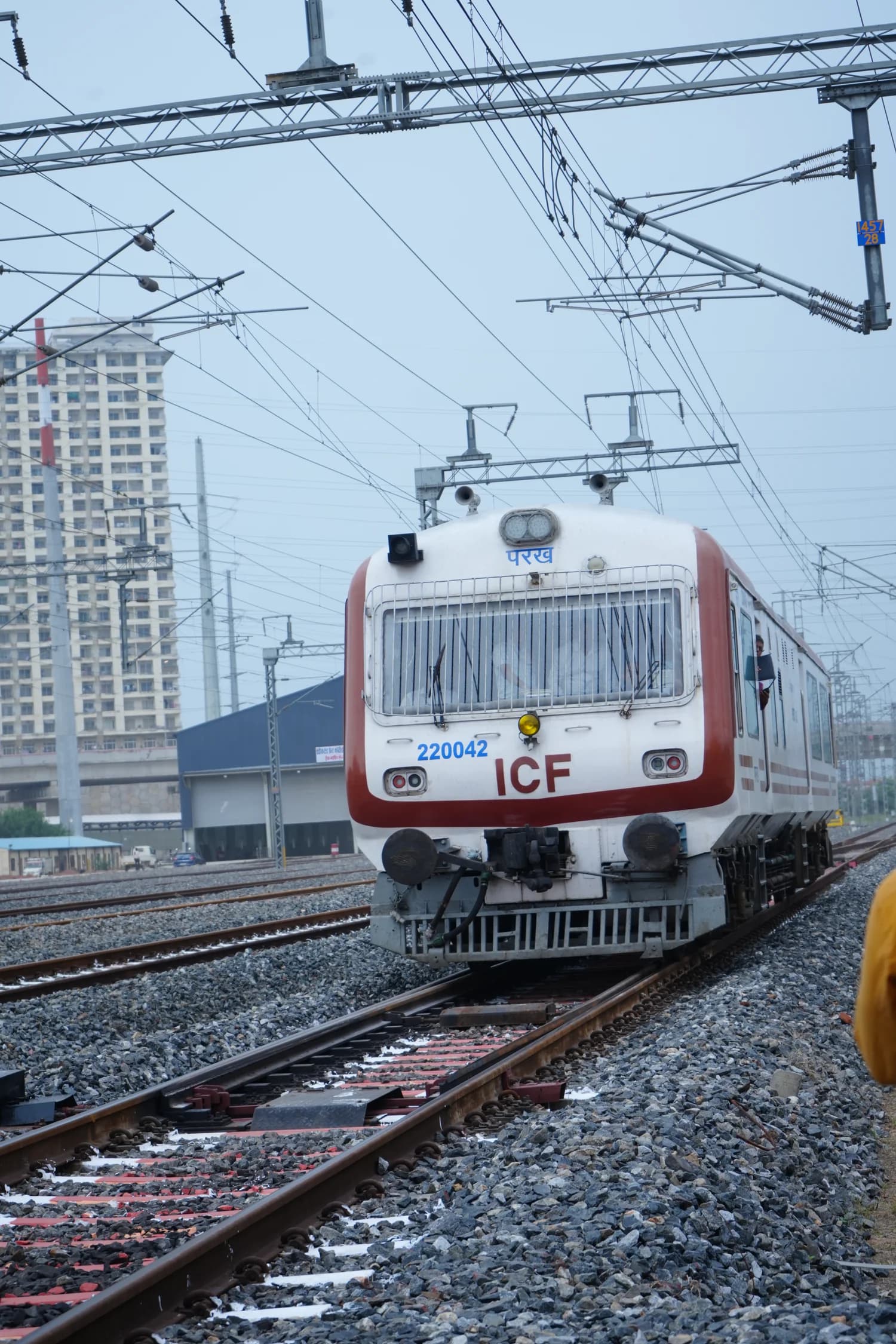 Cleaner line-haul, by rail
Our commitment
Every truck taken off diesel, every tonne moved by rail and every empty kilometre avoided is a step toward cleaner air. Harsh Express treats sustainability not as a badge, but as the way logistics should be run — recognised with the Sustainability Award at P&G LogiMeet 2026.
See the fleetHow we do it
More than 100 electric vehicles, including the Eicher Pro X, now run on Harsh routes — 63 in middle-mile and 18 in last-mile service — cutting tailpipe emissions in dense urban corridors.
Shifting long-haul tonnage from road to rail — through VPUs, SLRs and Parcel Cargo Express Trains — moves more cargo with far lower CO₂ per tonne-kilometre.
A continuously renewed fleet of modern BharatBenz and Eicher vehicles replaces older, less efficient trucks — better mileage and lower emissions on every trip.
Preventive servicing, engine tuning and tyre care keep every vehicle running at its best, so it burns less fuel and emits less for the same load.
Load consolidation, multi-stop milk-runs and a steadily improving truck average mean fewer empty kilometres and more freight moved per litre of fuel.
The 24x7 Control Tower plans and optimises routes to cut empty running, idling and detours — the simplest emissions a journey can avoid.
Eco-friendly packaging, along with recycling across offices and warehouses, reduces waste beyond the road itself.
Drivers and staff are trained and encouraged to make sustainable choices — fuel-efficient driving, waste reduction and safety — so it becomes part of daily work.
Carbon approach
Our carbon strategy follows a simple order — cut emissions at source first, then account for and offset what remains, working toward carbon credits as reductions are verified.
Track fuel use, EV share, rail share and emissions at a shipment level, so every reduction can be seen and verified.
Cut emissions at source — electrify city routes, shift line-haul to rail, renew the fleet and drive up utilisation and efficiency.
Build on verified reductions to work toward carbon credits, and support offset projects where emissions cannot yet be removed.
Carbon credits
A carbon credit represents one tonne of CO₂e kept out of the atmosphere. Every Harsh truck moved to electric and every load shifted from road to rail is a real, measurable reduction — the foundation for credits that our customers can count against their own footprint.
Moving freight by rail can cut CO₂ per tonne-kilometre by a large margin versus road — our biggest single lever.
Over 100 EVs replace diesel on city routes, removing tailpipe emissions where they are most concentrated.
Higher load factors, better truck average and smarter routing mean fewer litres burned for the same freight.
From reduction to credit
Set a credible emissions baseline for each route and mode, so savings are measured against a real reference.
Capture fuel, EV share, rail share and tonne-kilometres at shipment level through the ERP and Control Tower.
Have the reductions independently verified against a recognised carbon standard.
Convert verified reductions into carbon credits, and give customers the data to report greener shipments.
Our carbon-credit programme is being built with these principles — measured first, verified independently, and shared transparently. Targets and standards are being finalised as the programme scales.
For our customers
Logistics is a major part of most companies’ Scope 3 emissions. By moving with Harsh — on rail, on EVs, on optimised routes — you cut the carbon of your supply chain and get the data to prove it.
The road ahead
Harsh is expanding its EV deployments, deepening its rail partnership and tightening efficiency across the network — with the long-term ambition of a net-zero logistics operation. The targets and timeline are being firmed up as the programme grows.
Partner on sustainable logistics